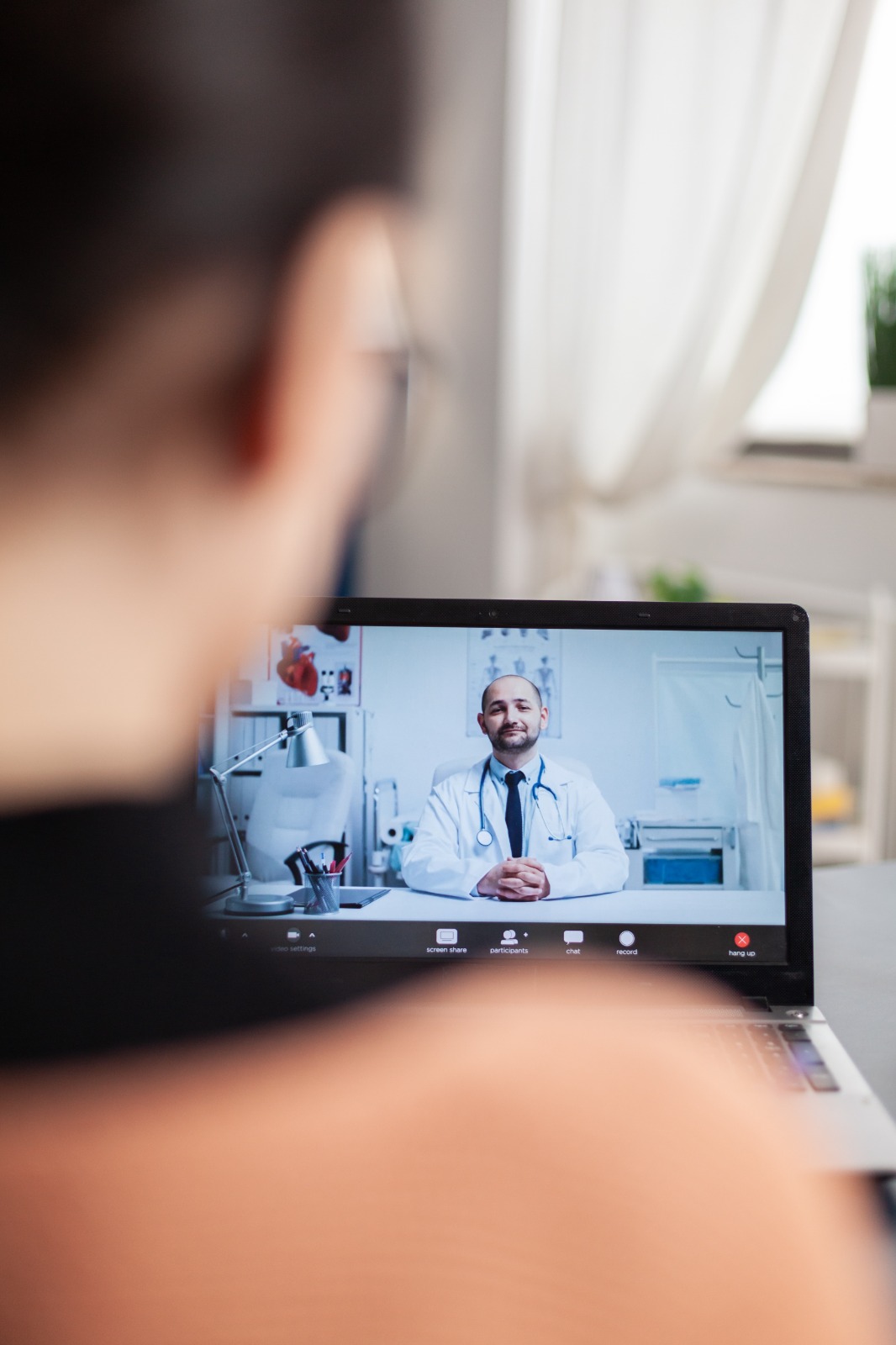
What Tele-ophthalmology actually means
Tele-ophthalmology uses communication technologies, images, and clinical data to support some aspects of eye care at a distance. It may include live video consultations, review of retinal photographs, or remote assessment of testing performed at a local facility.
What can a virtual visit accomplish?
Remote care can sometimes help patients review symptoms, discuss treatment adherence, understand previously obtained test results, obtain a second opinion, coordinate referrals, and decide whether urgent in-person evaluation is needed. Telemedicine can also improve access for patients who live far from specialty clinics or have mobility challenges. Its value depends on the clinical question and the quality of available information.
Where imaging expands possibilities
High-quality retinal photographs, OCT scans, and visual fields can sometimes be captured at a clinic and reviewed remotely by an eye specialist. This is especially relevant to certain diabetic eye screening pathways and longitudinal monitoring models. However, results still depend on image quality, appropriate follow-up, and timely referral when abnormalities are found.
What cannot be reliably checked over an ordinary video call?
A video conversation alone generally cannot replace accurate intraocular pressure measurement, a thorough dilated retinal examination, gonioscopy, slit-lamp evaluation, or diagnostic imaging. Lighting and camera limitations can make photographs misleading. A patient might still need an in-person exam after a virtual consultation.
When remote care is not appropriate
New flashes with many floaters, a shadow or curtain over vision, sudden vision loss, significant eye pain, chemical injury, or other acute symptoms require urgent in-person assessment.
How to prepare for a remote appointment
Before a virtual visit, gather your medications, medical history, previous test results, symptom timeline, and questions. Check whether the clinician will need recent eye pressure readings or imaging from another location. Ask what the visit can and cannot establish, and whether an in-person follow-up is needed. When used thoughtfully, remote care can complement—not replace—comprehensive ophthalmology.
Next step: Have questions about your eye health or whether you need a comprehensive examination? Contact Bohonos Eye Care at office@bohonoseyecare.com or 210-729-0544 for general scheduling information. Do not use email for emergencies