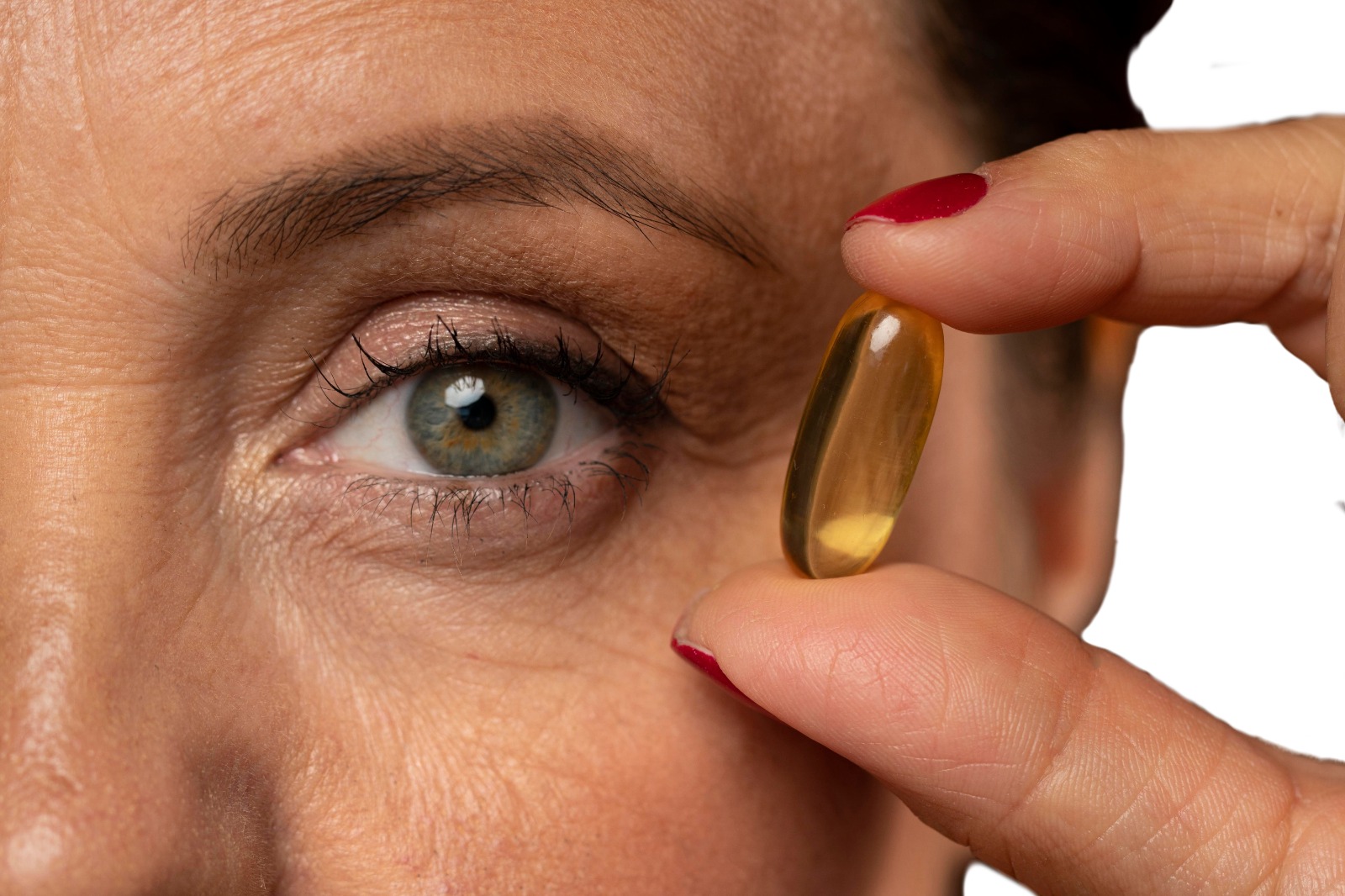
When it comes to managing glaucoma, lowering eye pressure remains the most important proven strategy for protecting vision. Prescription eye drops, laser treatment, and surgery can all play a role. But researchers are also investigating whether certain nutrients and plant-based compounds could provide additional support for the optic nerve.
Some early studies are encouraging. Supplements have been explored for their effects on eye pressure, circulation around the optic nerve, and the health of retinal nerve cells. The important distinction is that these are potential additions to standard care—not replacements for it. Here are several of the most studied options.
Mirtogenol: A Combination of Pine Bark and Bilberry Extracts
Mirtogenol is the name used in clinical studies for a combination of French maritime pine bark extract and bilberry extract. Both contain plant compounds called polyphenols, which are being studied for antioxidant and vascular effects.
In one small study of people with elevated eye pressure but without established glaucoma, the combination was associated with a modest reduction in intraocular pressure over several months. A separate 24-week study involving 79 people with ocular hypertension found that the studied extract combination, when added to latanoprost eye drops, was associated with greater pressure reduction than latanoprost alone.
These findings are interesting, but the studies were relatively small and focused on ocular hypertension rather than showing that the combination prevents vision loss in people with glaucoma. The studied formulation is not a substitute for prescribed pressure-lowering therapy, and results should not be assumed to apply to every pine bark or bilberry product.
Ginkgo Biloba: Research on Optic Nerve Circulation and Visual Function
Ginkgo biloba is a plant extract studied for its potential effects on blood flow and antioxidant pathways. Because some people develop glaucoma even when their eye pressure is within a statistically normal range, researchers have investigated ginkgo as a possible supportive approach in normal-tension glaucoma.
One small randomized study found improvements in certain visual field measurements after a short course of ginkgo. Other trials did not find the same benefit. A 2026 analysis of four studies reported a possible improvement in one measure of visual field function, but the authors emphasized that larger, longer studies are needed.
Ginkgo is not proven to prevent glaucoma progression, and it may increase bleeding risk when combined with blood thinners such as warfarin. It is especially important to discuss its use with your medical team if you take anticoagulants or are preparing for surgery.
Citicoline: Supporting Retinal Nerve Cell Function
Citicoline is a compound involved in cell-membrane and nerve-cell metabolism. Researchers have studied it as a possible way to support retinal ganglion cells—the cells that carry visual information from the eye to the brain and are damaged by glaucoma.
Some small studies have reported encouraging changes in visual field testing or measurements of retinal function. However, a systematic review of 10 studies involving 424 patients did not find convincing evidence that citicoline slows glaucoma progression. Its long-term clinical benefit remains uncertain.
Citicoline may be worth following as research continues, but it should not be viewed as a proven method of preserving vision or as a replacement for pressure control.
Nicotinamide (Vitamin B3): A Promising Area of Research
Nicotinamide, also called niacinamide, is a form of vitamin B3 that supports the production of NAD+, a molecule involved in cellular energy metabolism. Scientists are exploring whether improving energy availability in retinal ganglion cells could help them withstand glaucoma-related stress.
Early clinical trials have shown improvements in some tests of inner retinal function. In addition, a 2026 observational study of 2,920 matched patients with ocular hypertension found that those with documented nicotinamide use were less likely to receive a glaucoma diagnosis during follow-up. This association is encouraging, but it does not establish that nicotinamide caused the difference or identify an effective dose.
There is an important safety warning: high-dose nicotinamide used in some glaucoma research has been linked to serious liver injury. The American Glaucoma Society and American Academy of Ophthalmology advise against doses of 3 grams per day or more outside monitored clinical trials. Even lower supplemental doses being considered for glaucoma warrant medical guidance; nicotinamide and niacin are not interchangeable.
Forskolin and Rutin: Early Studies of Additional Eye Pressure Reduction
Forskolin is a plant-derived compound studied for its potential to influence fluid dynamics in the eye. Rutin is a flavonoid investigated for antioxidant and vascular effects. Researchers have evaluated the two together as an adjunct to prescription glaucoma medications.
In an open-label study of 97 people with glaucoma whose eye pressure remained above their target despite medications, patients receiving a forskolin-and-rutin combination had approximately 10% additional pressure reduction over 30 days compared with their starting values. This is a potentially useful signal, but the brief, nonblinded study does not establish long-term vision protection or confirm which component provided the benefit.
Why an Individualized Approach Matters
Glaucoma is not the same for everyone. One person may have elevated eye pressure, while another has normal-tension glaucoma. Others may have advanced optic nerve damage, changing visual fields, additional medical conditions, or medications that affect which supplements are appropriate.
A thoughtful conversation with your ophthalmologist should consider your glaucoma type and stage, target eye pressure, visual field and optic nerve findings, current treatment plan, and overall health. Your clinician can also review possible interactions, liver health, bleeding risk, upcoming procedures, and whether a supplement has a realistic goal in your particular situation.
More supplements do not necessarily mean better protection. An approach that may be reasonable for one patient may be inappropriate or unnecessary for another. If you and your physician choose to explore an adjunct, your regular glaucoma appointments and testing remain essential.
The Bottom Line
At Bohonos Eye Care, the goal is personalized, evidence-informed care. If you are curious about supplements, bring a list of what you already take to your next eye appointment. Together with your treating physicians, you can discuss whether any adjunctive option fits your medical history and glaucoma management plan.